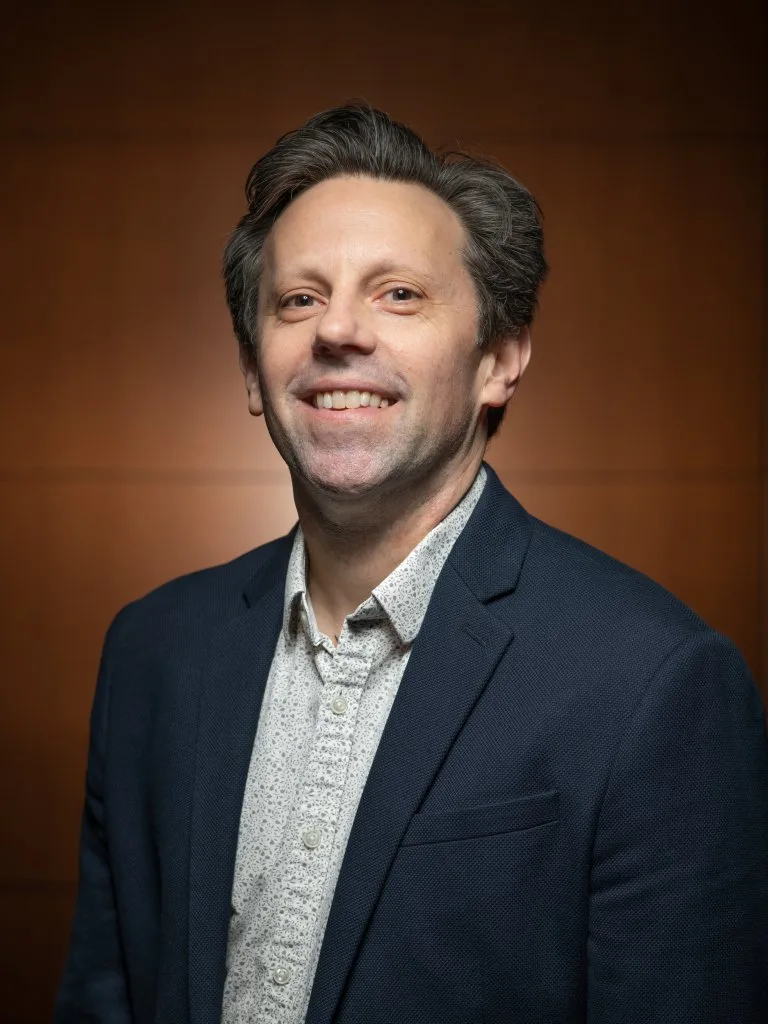
This page has some issuesTomi Slotte Dufva

Filed under

Digitality

  1. Exploring Digital Media and Creative Practices: An Interview with Bob Sweeny

    Some time ago, I had the privilege of speaking with Professor Robert W. Sweeny about digital and art education. He shared many fascinating insights—read them below. Robert W. Sweeny In today’s rapidly evolving world, digital media continues to reshape how we learn, teach, and create. To explore these intersections, I sat down with Robert (Bob) Sweeny, a professor of art education at Indiana University of Pennsylvania. With nearly two decades of experience, Bob is not only a leader in his field but also the founder of the Digital Visual Study Research Group. His latest book, Digital Visual Art Education: Making,…

    Read more

  2. Exploring the Intersection of Technology and Art Education with Ryan Patton

    Some time ago, I had the privilege of speaking with Professor Ryan Patton about digital and art education. He shared many fascinating insights—read them below. Ryan Patton Ryan Patton is an associate professor and undergraduate program director of Art Education at Virginia Commonwealth University (VCU). With a career spanning over two decades, Ryan has become a leading voice in exploring the dynamic intersection of technology and art education. His research and teaching delve into the evolving role of digital media, human-computer interaction, and the ethical and educational implications of integrating artificial intelligence (AI) into the arts and education. In this…

    Read more
  3. Digital ”äger rum”: om den post-digitala världen

    Tomi Slotte Dufva: Hej = Hello. From Drawing a Day series: https://drawing.plumbing Idag är det Svenska dagen. Därför tänkte jag skriva ett blogginlägg på svenska. Today we celebrate Finnish Swedish Heritage day and to join the celebrations I wrote a little piece in Swedish. Digital ”äger rum”: om den post-digitala världen ”Vi lever i en digital värld”, börjar förvandlas till en kliché, men det är visserligen ändå sant. En snabb googling berättar att digitalisering förändrar språket⁠¹, hur företag utvecklas⁠², att digitaliseringen förändrar hela ”vår värld”⁠³ och ”allt”⁴.⁠ En likadan förändring finns också inom utbildning, utbildningsstyrelsen har till exempel hållit workshops…

    Read more
  4. Misrecollection of forgetting’ -The absent minded programmers guide to machine learning

    “Programming is forgetting” teaches Allison Parrish, an NY-based artist, and programmer (Parrish, 2016). What she means is that by translating functions, actions and material into the digital world by programming we make compromises and forget the complexity of the world. Such accommodation is essential; otherwise, it would be very hard to create any digital programs. For instance, translating sound into digital form means choosing what components of the sound are vital and what are not. Same goes for digital photographs. We have to choose what is essential in the sounds or images and then translate that into repeatable procedures and…

    Read more
  5. Digi-grasping article out now!

    One of the significant questions in digitality for me has been, and is, the experience of it: How do we experience the different digital signals, processes, algorithms, nonhuman actors, that establish, create and modify our digital surroundings? Is digitality really an out of body experience, meaning we can't grasp it with our being? Or could there be embodied digitality? Not virtual, or augmented reality, but can we comprehend the digitality in our everyday lives? Moreover, if we could describe digitality as embodied experientiality, could that change the discourse of digital society? If these things interest you, I am glad to…

    Read more
  6. Algorithmic content creation and the neoliberal hypercapitalism

    Writer and artist James Bridle recently posted an article on Medium in which he describes the strange and abusive world of children's youtube. The article as a whole is worth a read, and I strongly encourage you first to read that and then come back here. In short, what Bridle describes is the strange and often sick world of the postdigital condition, what I could name digital capitalism, where digital technologies are being used to quickly create content in order to get page-views to get ad clicks to get money. This maybe complicatedly sounding scheme is actually pervasive on the…

    Read more
  7. Grasping the digital

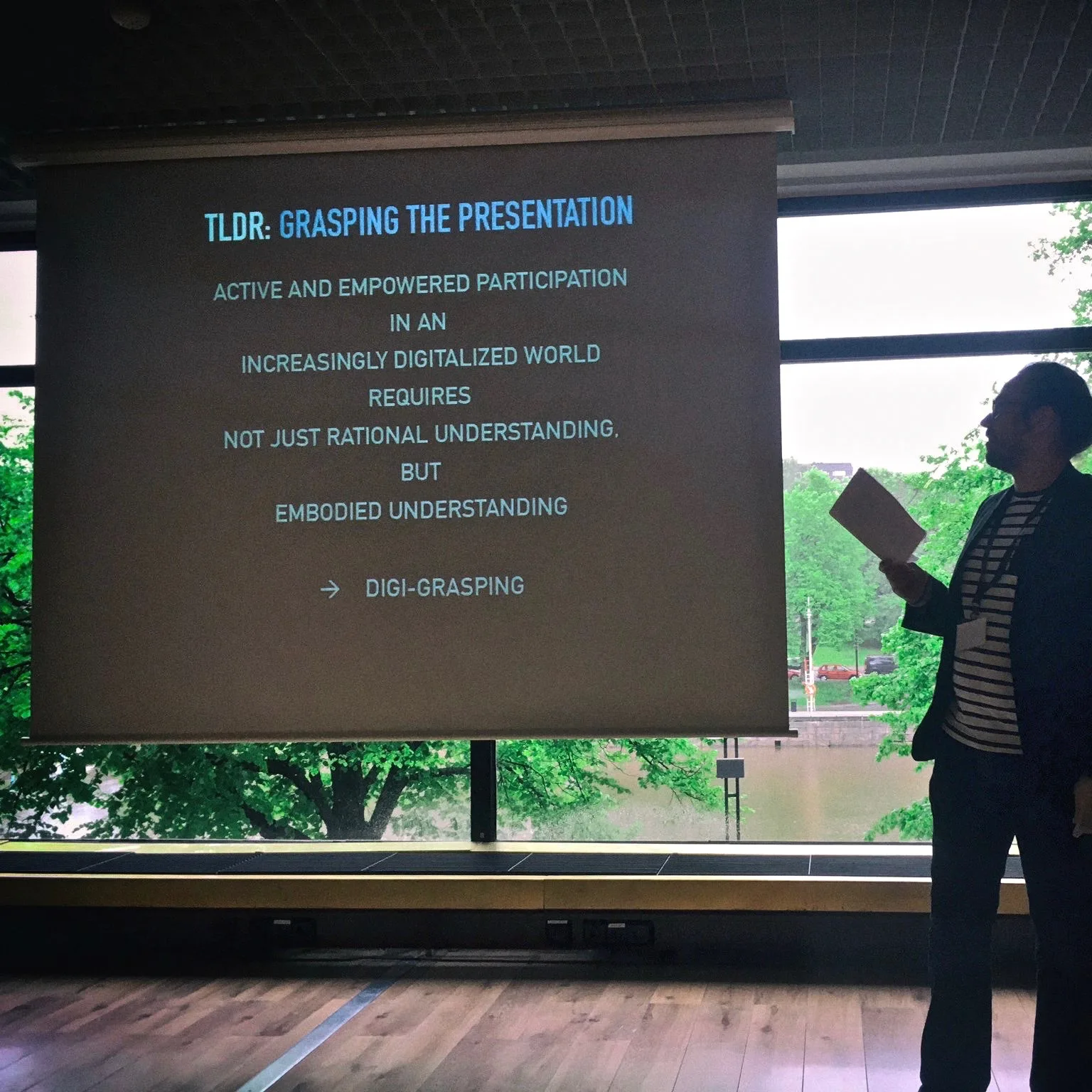
    A Recent article (not yet published) I wrote with my brother examines some of the difficult questions raising from the increased use of digital technologies. For example, digitalization can be seen to act as an almost mythological buzzword for progress. But, what does digitalization mean? How do we live in the digital world? In our article we argue for a more embodied understanding of digital technologies is needed to participate in the discussion of the digital world; without experiental, embodied understanding, it can be difficult to comprehend what digital is and how it affects as well as appears in one's…

    Read more
  8. Being digital

    From my drawing blog. This post was inspired by two articles I read recently. I Highly prompt you to read them. I Am Capital by Hannes Grassegger The Data That Turned the World Upside Down by Hannes Grassegger & Mikael Krogerus For a while now, my research on creative coding has become increasingly focused on the ways we perceive and experience digitality -or the lack thereof. One of my initial research premises was that the increasing digitalization could lead to a new kind of digital divide. Previously digital divide has referred to the divide between those who have access to…

    Read more